Gallery
Examples

English and French word alignment
See how “Hello world” maps to “Bonjour le monde” word by word: a simple bilingual alignment diagram for learners and teachers.
View example
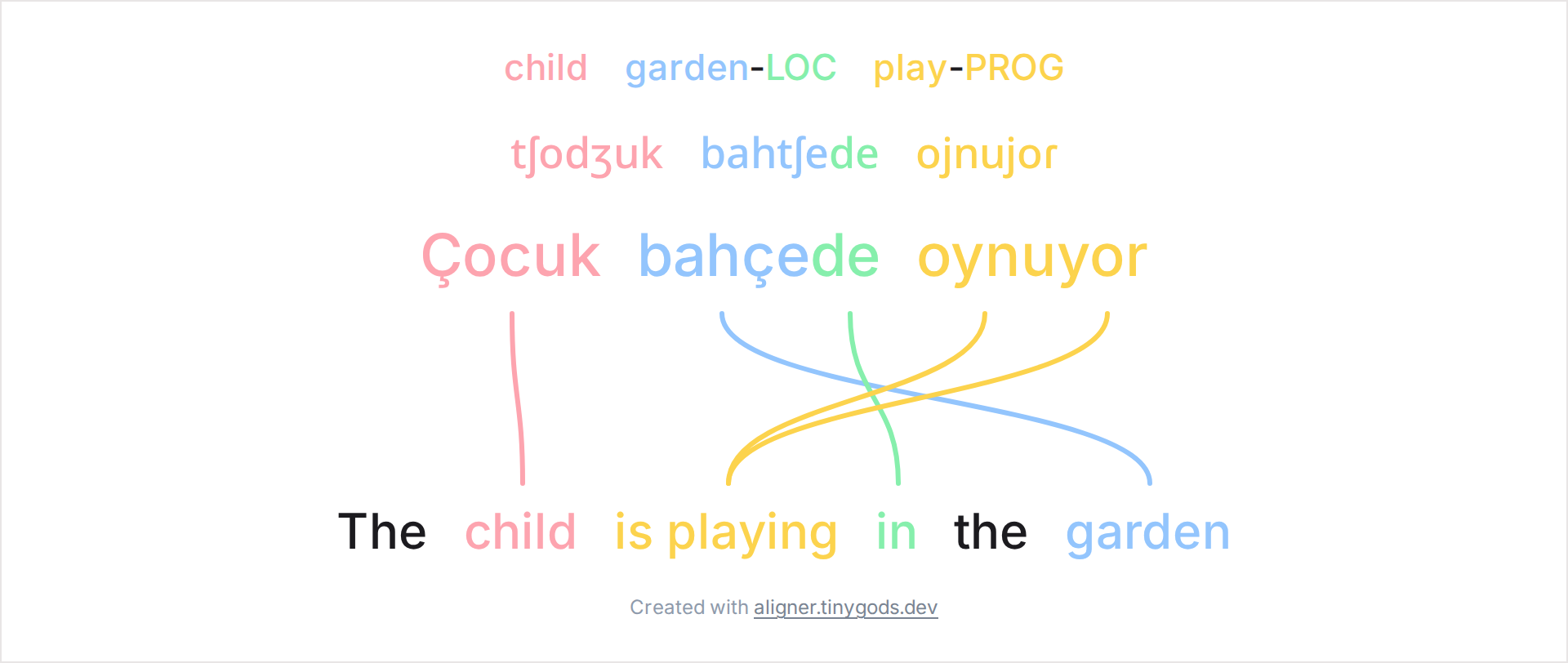
Turkish interlinear gloss with IPA
Four-line interlinear layout: morpheme glosses, IPA, Turkish text, and English translation, with tight spacing between the gloss rows.
View example
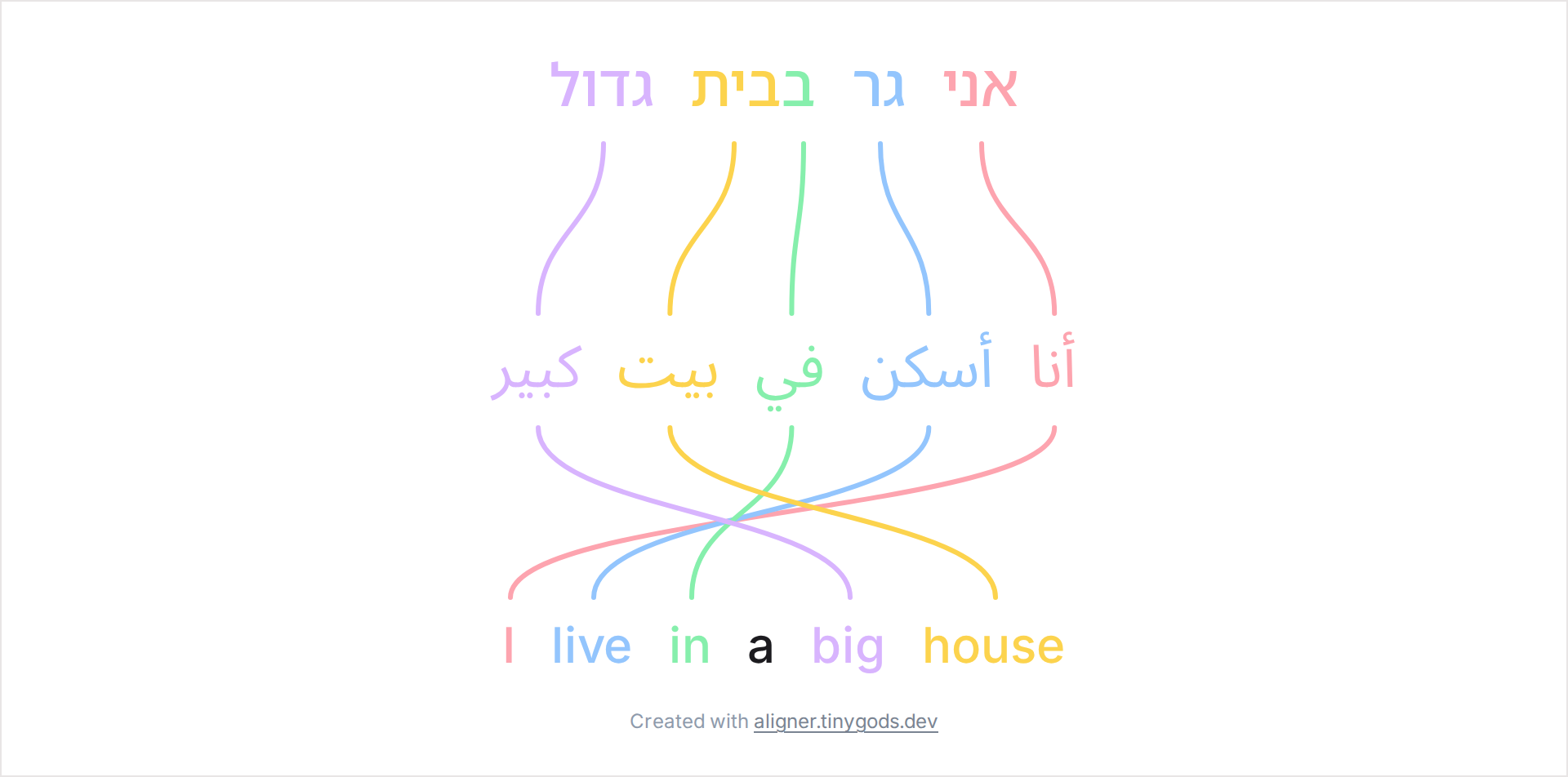
Hebrew and Arabic with English (RTL scripts)
Compare two right-to-left languages against English: bound prepositions, parallel adjective placement, and crossing links when word order differs.
View example
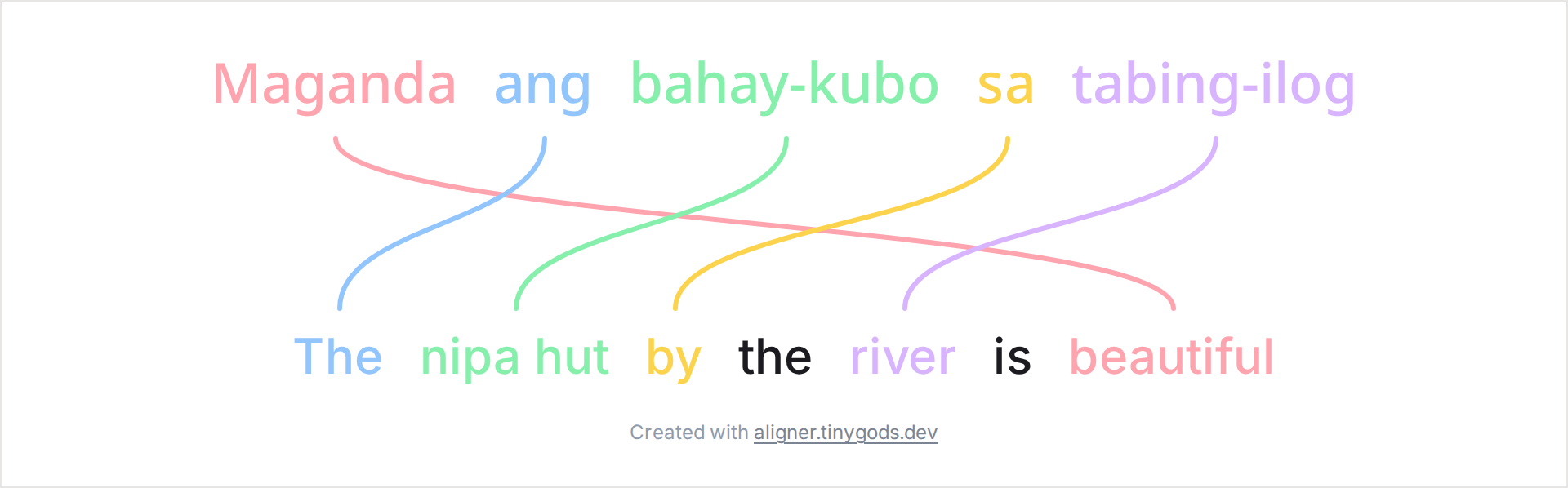
Tagalog compounds and hyphenated words
Keep hyphens inside Tagalog compounds (bahay-kubo, tabing-ilog) instead of splitting them at every dash: a tokenizer override demo.
View example

Japanese, Chinese, and English word order
Three-line alignment across Japanese (SOV), Chinese (SVO), and English, including crossing links when the verb and object swap.
View example
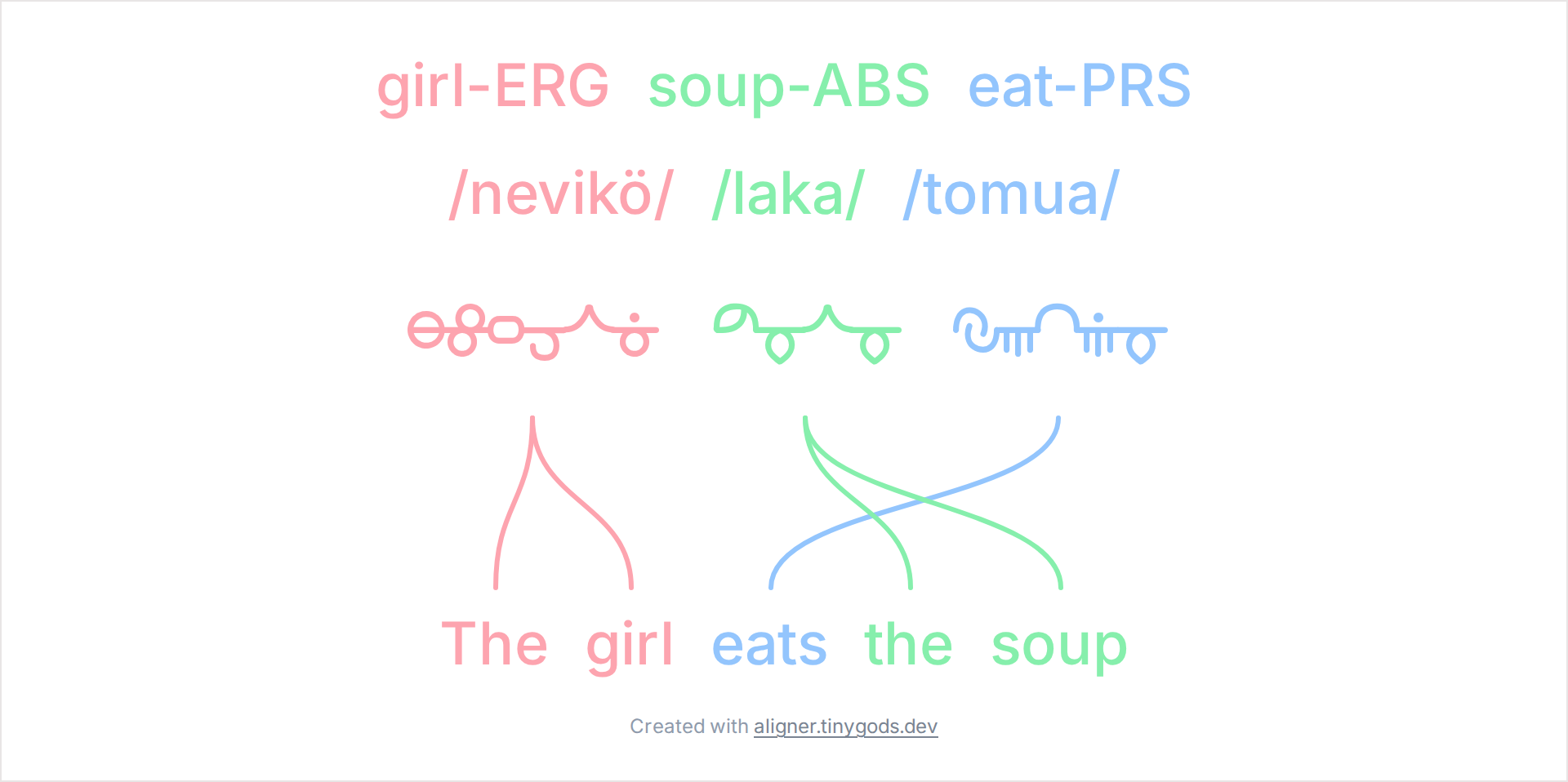
Conlang interlinear gloss with a custom font
A constructed language in its own script: an ergative-absolutive clause glossed and aligned to English, with the source line in an uploaded custom font.
View example

Japanese vertical writing (tategaki) aligned with English
A Japanese sentence set vertically, with its English translation aligned beside it. Shows how column layout handles a vertical script paired with a horizontal one.
View example

Traditional Mongolian script aligned with English
A traditional Mongolian phrase in vertical script with a transliteration tier and an English translation, showing a script whose columns run left to right.
View example
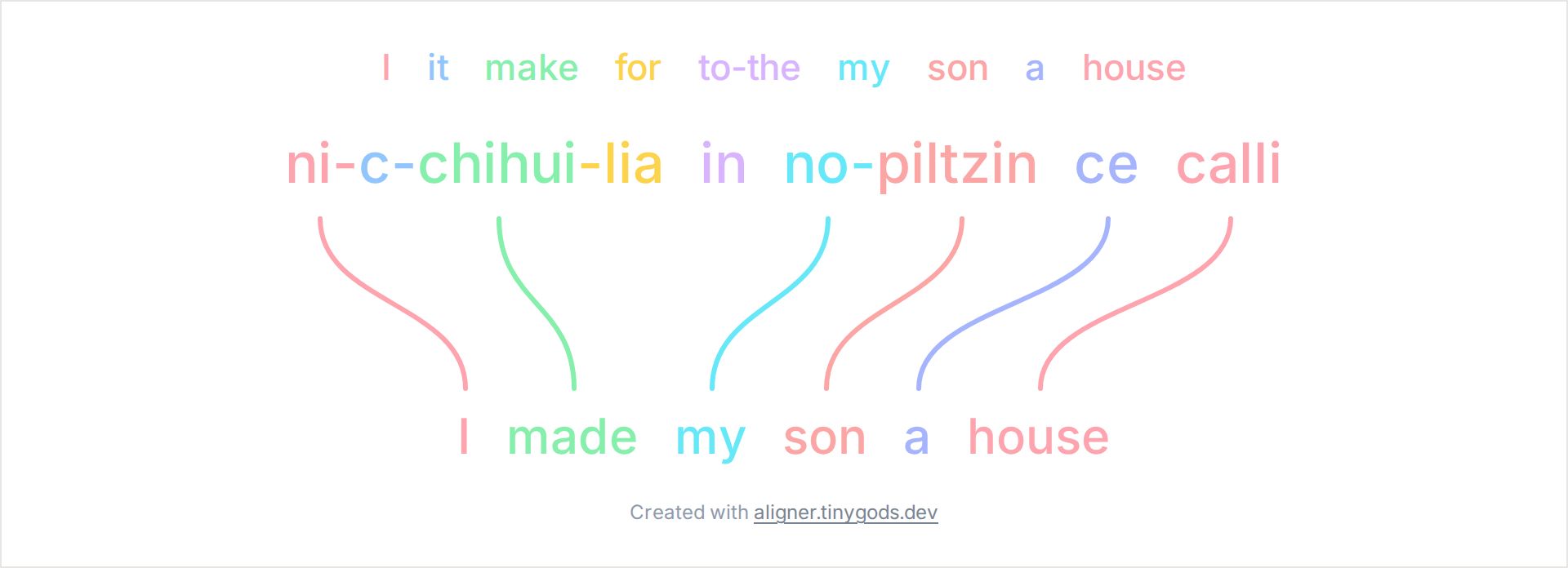
Classical Nahuatl interlinear gloss (word-by-word)
Vertical interlinear text for Nahuatl: segmented verb morphology (ni-, c-, chihui, -lia) aligned to English “I made my son a house”.
View example
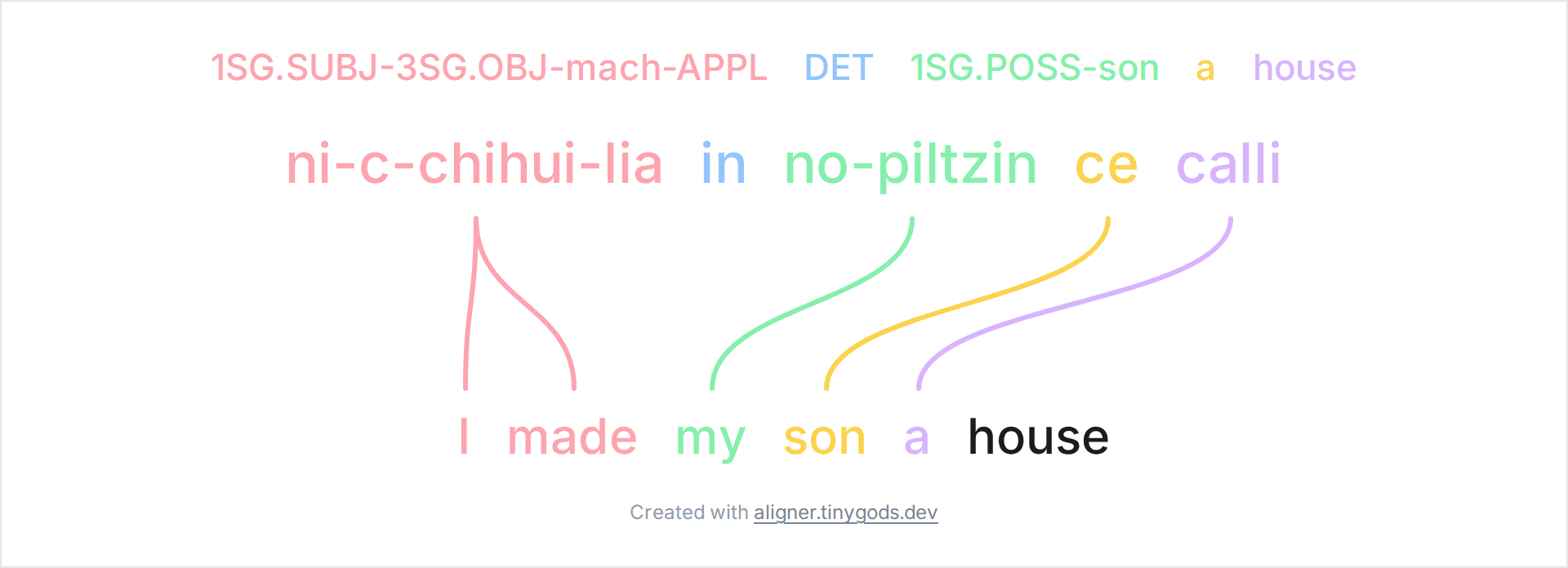
Nahuatl with Leipzig Glossing Rules abbreviations
Same Nahuatl clause with grammatical category labels (1SG.SUBJ, 3SG.OBJ, APPL) instead of full English gloss words.
View example
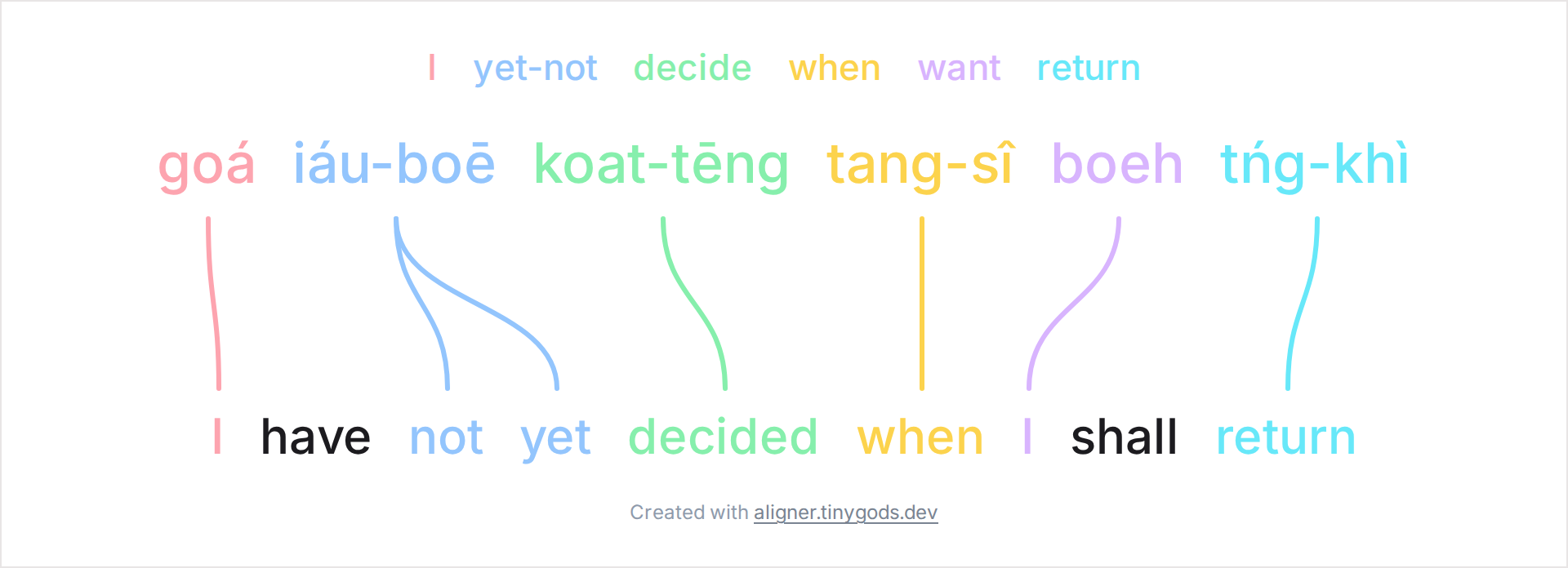
Taiwanese Minnan interlinear gloss
Southern Min (Taiwanese) sentence with morpheme glosses and English: “I have not yet decided when I shall return”.
View example
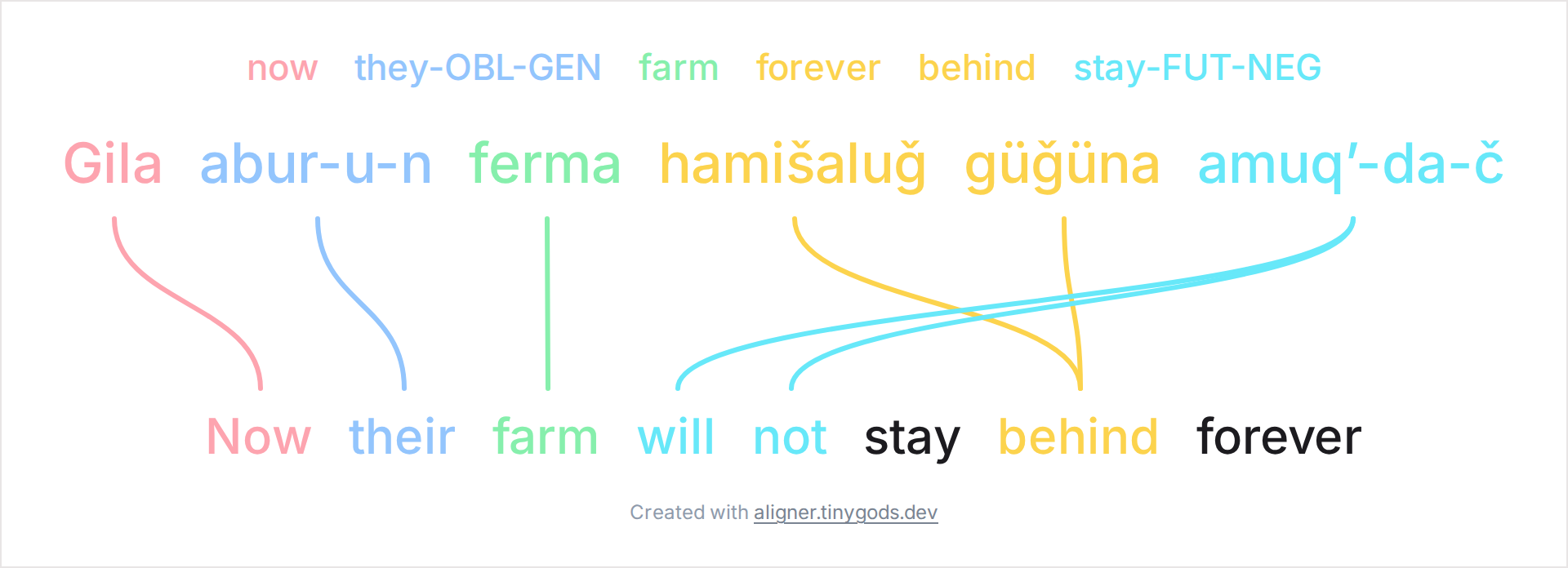
Lezgian morpheme-by-morpheme interlinear gloss
Lezgian (Northeast Caucasian) farm sentence: hyphen-aligned morphemes, OBL/GEN case tags, and FUT/NEG inflection.
View example

Turkish infinitive gloss (one-to-many correspondence)
Turkish çık-mak with gloss come.out-INF: one morpheme glossed as two English words using Leipzig period notation.
View example

Latin interlinear gloss with zero morpheme (ø)
puer-ø glossed as boy-NOM: an overt ø marks a null nominative case exponent in the object line.
View example

Tagalog reduplication in interlinear gloss (~)
Tagalog bi~bili glossed IPFV~buy: reduplication marked with a tilde per the Leipzig Glossing Rules.
View example
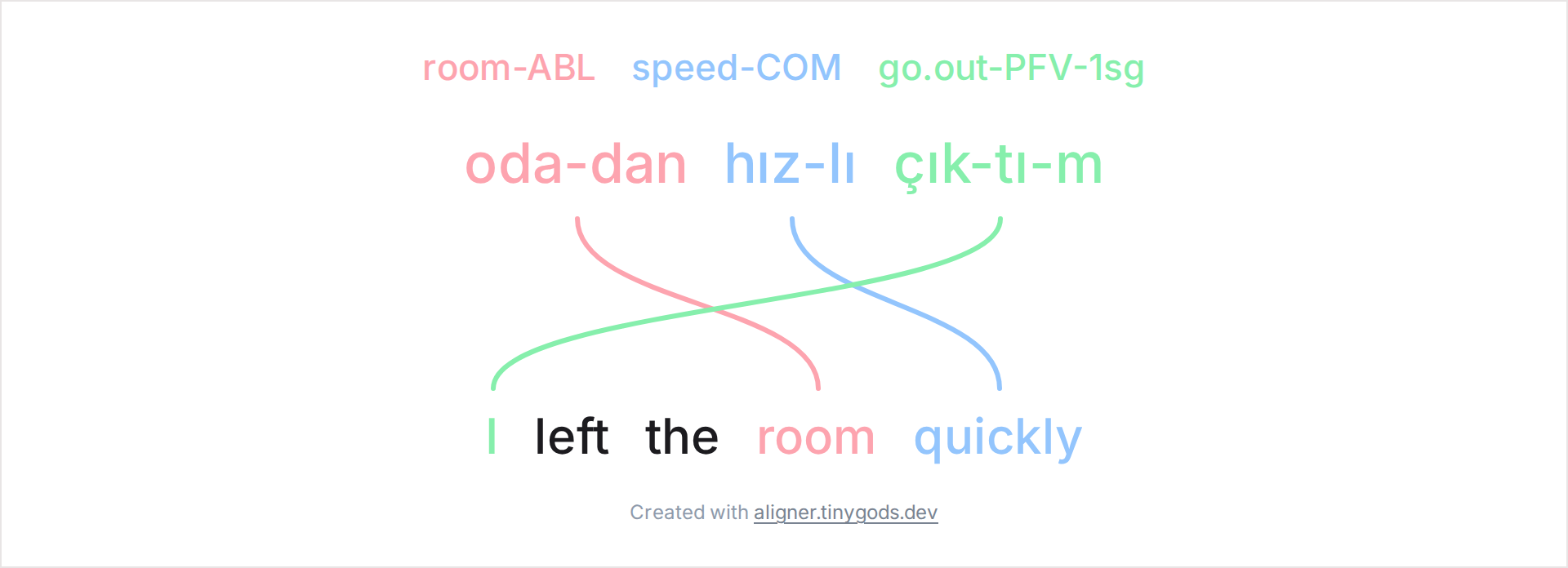
Turkish case and verb morphology (Odadan hızlı çıktım)
Turkish “I left the room quickly”: ablative -dan, comitative -lı, and a first-person past suffix, aligned to English word by word.
View example

French clitic pronouns in interlinear gloss (Je t’aime)
French Je t’aime with morpheme gloss I you love: the clitic pronoun t’ is aligned separately from the verb.
View example
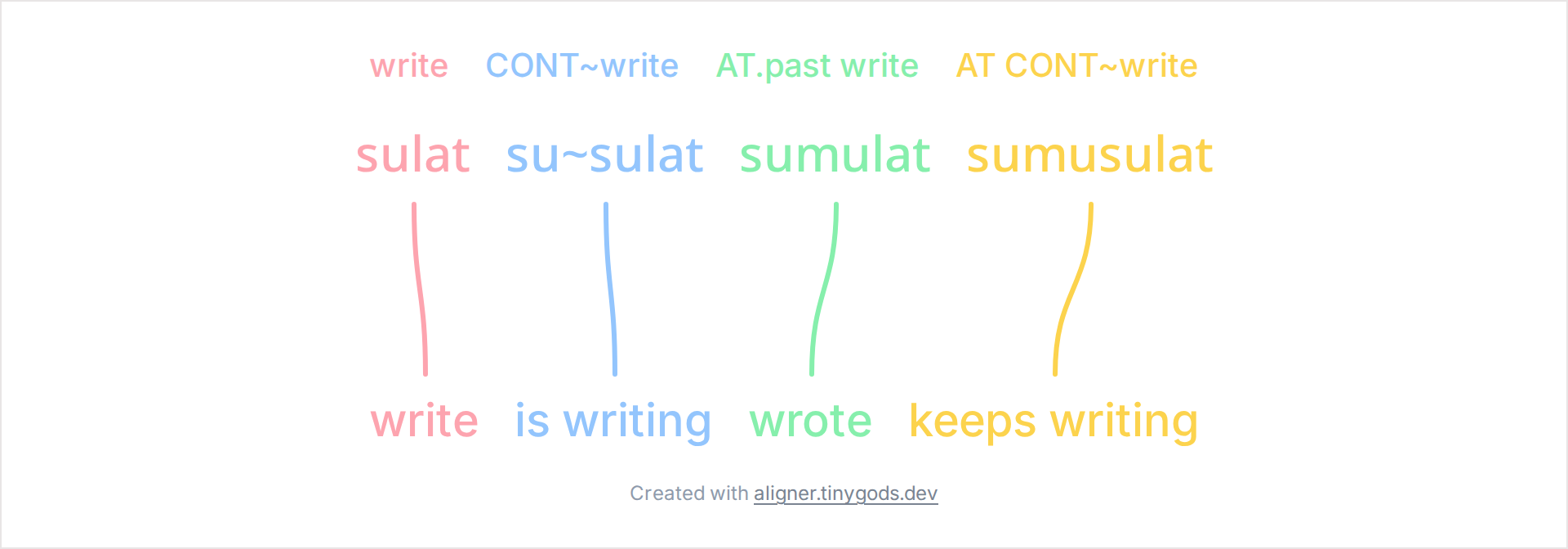
Tagalog verbal aspect paradigm (interlinear)
Four Tagalog verb forms (sulat, su~sulat, sumulat, sumusulat) with aspect and mood glosses and English equivalents.
View example

German dative plural with umlaut (unsern Vätern)
German unser-n Väter-n glossed our-DAT.PL father\PL-DAT.PL: syncretism and umlaut marked in Leipzig style.
View example
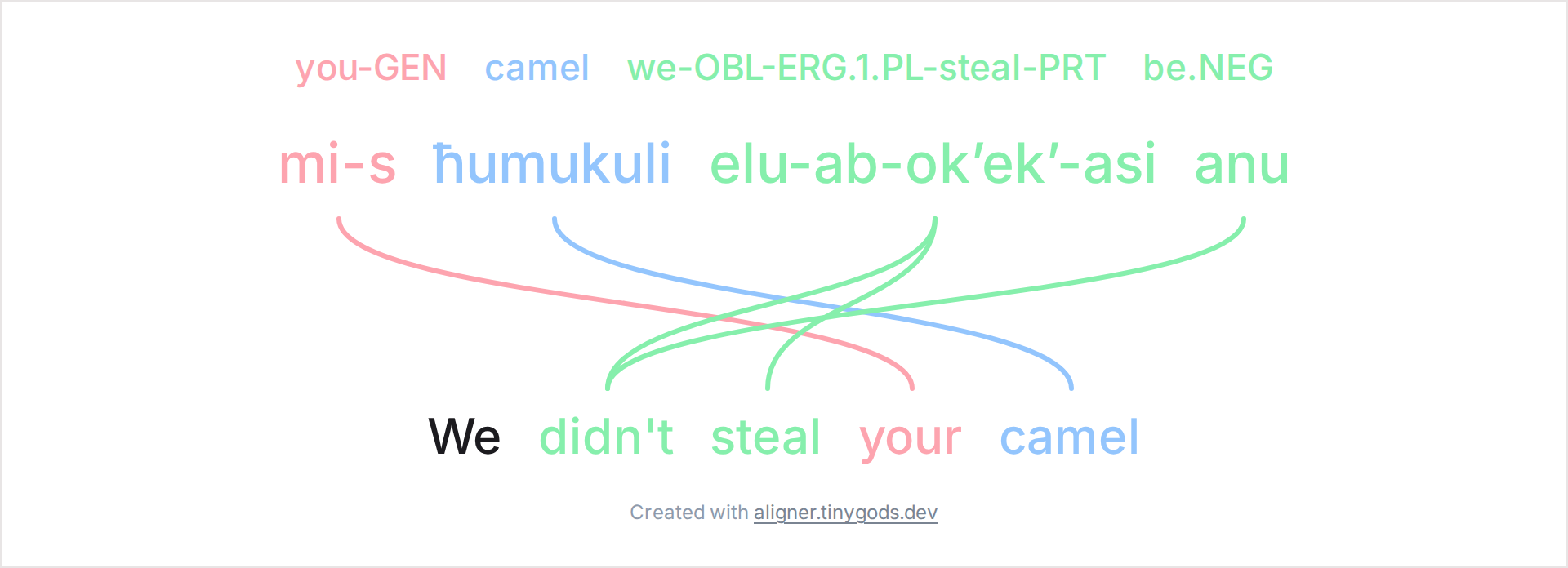
Avar interlinear gloss (Caucasian agreement)
Avar “We didn’t steal your camel”: ergative agreement, genitive, and negation on a single verb complex.
View example
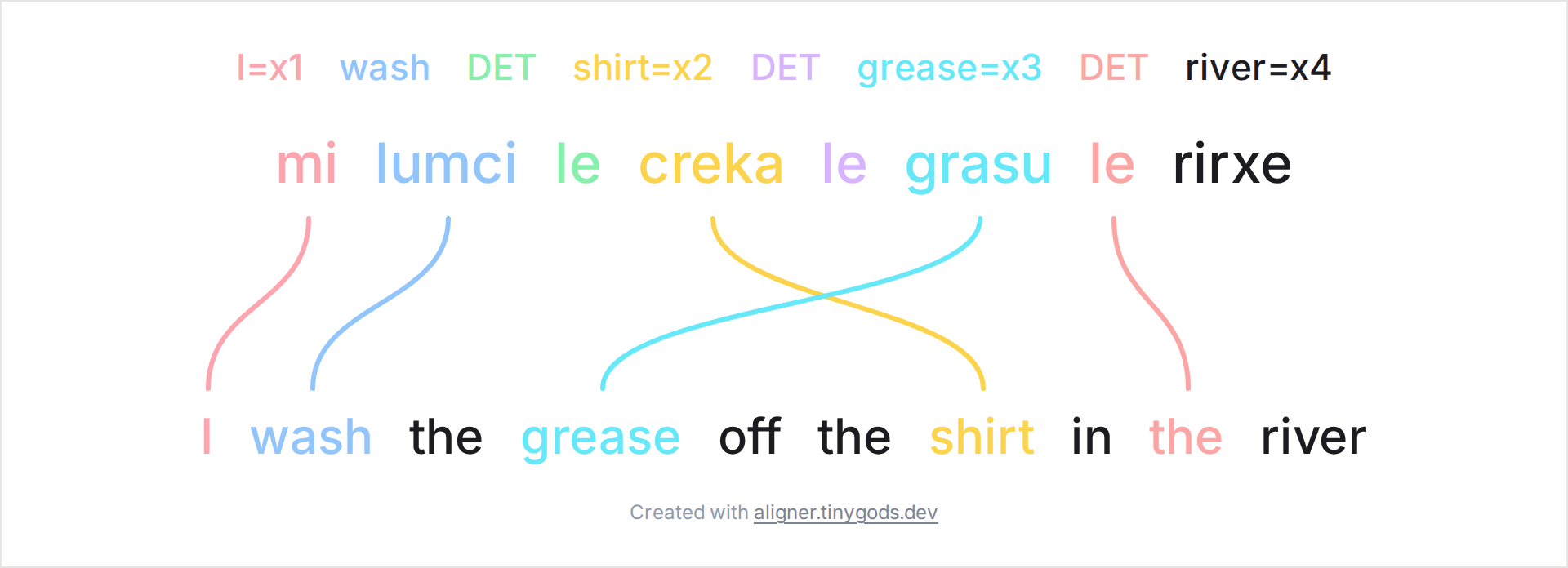
Lojban interlinear gloss with sumti placeholders
Lojban washing sentence with x1–x4 placeholders: a logical-language structure aligned to English.
View example
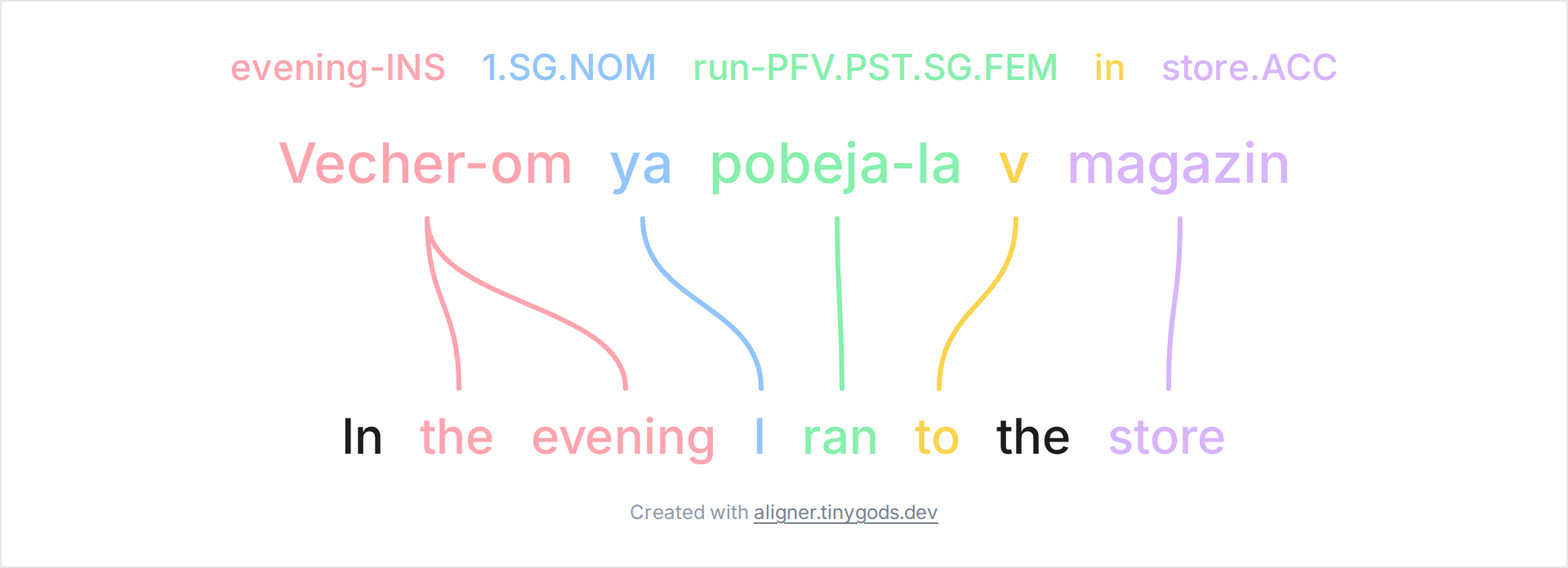
Russian case and gender agreement (evening run)
Russian “In the evening I ran to the store”: instrumental, feminine past, and accusative in one interlinear block.
View example